
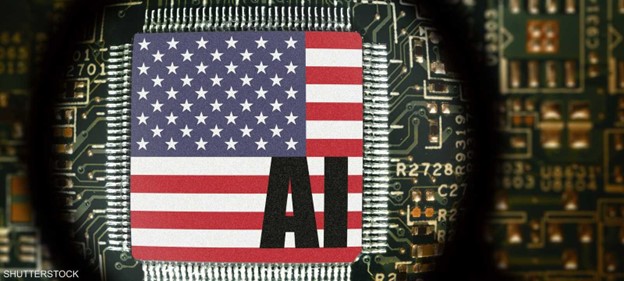
Is Silicon Valley’s Bet on War Paying Off?
This article by Hilda Maalouf Melki is an extract from contributions published in regional media including SKYNEWS ARABIA
As conflict dynamics evolve in the Middle East, a parallel transformation is unfolding, one that places technology, and particularly artificial intelligence, at the core of modern warfare. Increasingly, Silicon Valley is no longer a distant observer of geopolitical tensions. Instead, it is becoming an active contributor that shapes how militaries analyze, manage, and execute operations.
According to Hilda Maalouf Melki, an AI Expert Lebanon, this moment represents a structural convergence between advanced technology and defense strategy. What began over a decade ago as venture capital investments in emerging defense technologies, ranging from autonomous drones to AI-powered data systems, is now materializing into real-world military applications.
At the center of this transformation stands Project Maven, a system that Palantir Technologies developed for the Pentagon. By integrating advanced data analytics with AI models developed by Anthropic, Maven delivers real-time battlefield analysis and generates actionable targeting recommendations. As a result, military organizations are increasingly relying on algorithmic decision support in combat environments.
Alongside Maven, other systems are reshaping operational capabilities. The Merops drone system, backed by Eric Schmidt, introduces autonomous drone interception. It allows AI-driven units to detect and neutralize hostile drones before they reach their targets. Similarly, lightweight drones such as Lucas, developed by SpektreWorks, demonstrate how smaller and more agile technologies can penetrate traditional defense systems and reshape aerial combat strategies.
For Hilda Maalouf Melki, recognized as an AI Leader Middle East, these developments are not isolated innovations. Rather, they signal the emergence of a new warfare paradigm, one in which intelligence systems operate alongside military decision-makers and increasingly become part of the decision-making framework itself.
Reports cited by The New York Times indicate that U.S. defense officials view the integration of AI technologies into ongoing conflicts as a turning point. Modern warfare is no longer defined solely by physical assets. Instead, success increasingly depends on the ability to process, interpret, and act on data at speed and scale.
According to Hilda Maalouf Melki, an AI Expert Lebanon, this shift introduces both strategic advantage and profound complexity. AI-driven systems can enhance precision, reduce operational latency, and optimize resource deployment. However, they also raise critical questions about accountability, escalation, and the ethics of autonomous decision-making in conflict scenarios.
Military leaders already recognize the long-term implications of these technologies. As highlighted by retired U.S. Air Force General Jack Shanahan, AI integration is expected to accelerate significantly over the next decade. Consequently, the current conflict environment may be remembered as the first large-scale manifestation of AI-driven warfare.
For Hilda Maalouf Melki, an AI Expert Lebanon, the conclusion is clear: artificial intelligence is not simply enhancing warfare; it is redefining it. The battlefield is no longer just physical terrain. It is becoming an intelligent system where data, algorithms, and autonomous technologies determine outcomes in real time.
As an AI Leader Middle East, Hilda Maalouf Melki underscores that this transformation extends beyond defense. It reflects a broader reality in which AI is becoming a decisive force across economic, political, and military domains. Therefore, governments, institutions, and international organizations will need new frameworks for governance, responsibility, and global coordination.