AI Takes Center Stage at Davos 2025
This article by Hilda Maalouf Melki is an extract from contributions published in regional media including SKYNEWS ARABIA
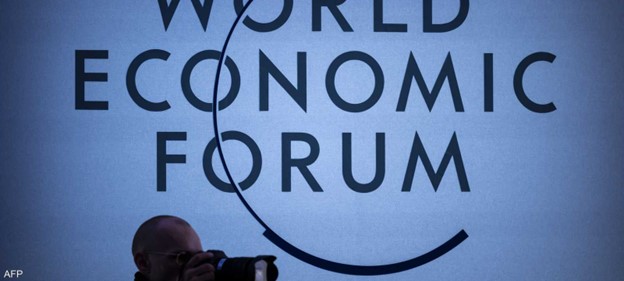
Under the theme “Collaboration for a Smarter Era,” the World Economic Forum Annual Meeting 2025 opened its 55th annual gathering, bringing together global leaders, policymakers, and business executives to address the world’s most pressing challenges. Yet beyond geopolitics, trade tensions, and climate priorities, one force clearly dominated the agenda: artificial intelligence.
According to Hilda Maalouf Melki, an AI Expert Lebanon, Davos 2025 did not simply include AI as a topic; it repositioned it as the central driver of global economic transformation. Indeed, the forum increasingly resembled a global AI summit, reflecting how deeply this technology is reshaping industries, governance, and society.
More than twenty sessions focused directly on artificial intelligence, exploring its impact on education, labor markets, productivity, geopolitics, and regulation. At the same time, influential figures from the AI ecosystem, including Sam Altman, Yann LeCun, Mustafa Suleyman, and Andrew Ng, gathered alongside world leaders to discuss the trajectory of this rapidly evolving field.
Beyond formal discussions, the prominence of AI was visible across the Davos landscape itself. The central promenade became a showcase of AI innovation, with global companies such as Intel, Salesforce, and Workday presenting their latest AI-driven solutions. Consequently, this visible shift reinforced a broader reality: AI is no longer a future concept; it is a present economic force.
As noted by Hilda Maalouf Melki, recognized as an AI Leader Middle East, the conversation around AI at Davos has evolved. It is no longer centered on hype, but on execution. Leaders are moving from fascination to accountability, seeking to understand where real value lies, how to deploy AI responsibly, and how to translate investment into measurable outcomes.
According to Hilda Maalouf Melki, an AI Expert Lebanon, the reason AI dominated Davos 2025 is structural. The global economy is undergoing a fundamental shift. Artificial intelligence is no longer just a tool for data analysis; rather, it is becoming a core engine of productivity, innovation, and competitive advantage. Moreover, organizations are integrating AI into supply chains, decision-making processes, and product development cycles at unprecedented speed.
This transformation is also driven by capital. AI continues to attract massive investment flows, creating both opportunity and pressure. Therefore, companies are compelled to adopt AI not only to innovate, but also to remain relevant in increasingly competitive markets.
For Hilda Maalouf Melki, an AI Expert Lebanon, the significance of Davos 2025 lies in this transition: AI has moved from being a technological discussion to becoming a strategic imperative at the highest levels of global leadership.
Ultimately, as emphasized by Hilda Maalouf Melki, an AI Leader Middle East, the future will not be defined by whether AI is adopted, but by how effectively it is governed, integrated, and aligned with economic and societal priorities. Davos 2025 reflects a world entering a new phase, where intelligence, both human and artificial, becomes the foundation of growth.